NRLS · Nano Refrigeration Lubricant Solution

Bring heat transfer
back to design

NRLS is a nano lubricant additive for refrigeration compressors, developed and manufactured by TZ US INC. Once charged, it circulates with the refrigeration oil and progressively strips the oil film deposited on evaporator and condenser surfaces — restoring heat transfer and reducing compressor power draw.

Talk to us — info@tzusinc.com
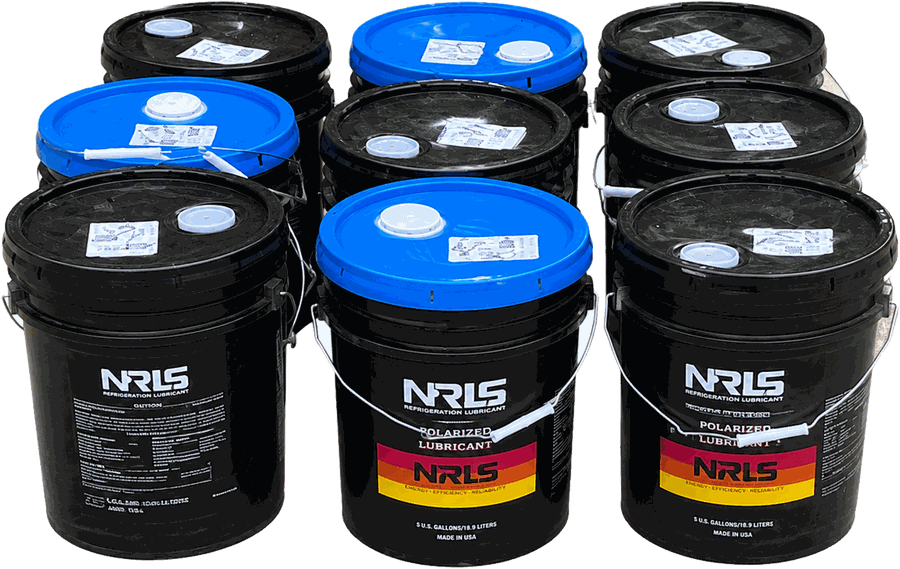
NRLS refrigeration lubricant in 5 US gallon pails, made in USA
01 / How it works

It travels with the oil, and acts where heat transfer happens

NRLS does not change the refrigerant, the machine, or the oil. It is charged into the existing oil circuit and works while the plant keeps running.

REFRIGERANT SIDE WATER / SECONDARY SIDE TUBE WALL OIL FILM · THERMAL RESISTANCE HEAT FLUX Q ↓
Oil deposited on heat exchange surfaces conducts far worse than the tube wall itself. Over years of operation it is a leading cause of degraded heat transfer and widening approach temperature.
Step 01

Circulates with the oil

Charged through the compressor oil circuit, it follows the lubricant and the oil that migrates with the refrigerant into the condenser, evaporator and connecting pipework.

Step 02

Strips the oil film

It reduces the tendency of oil to cling to the tube wall, thinning the resistance layer so the surface transfers heat again.

Step 03

Cuts friction losses

A dense adsorbed film forms on bearings, rotors and other friction pairs, filling micro-asperities and lowering friction loss.

02 / Technology

A generation apart from chlorinated additives

NRLS differs from the refrigeration additives commonly sold today by a full technology generation. The first generation, which appeared in the 1990s, is built on chlorinated alpha-olefin: a chlorine-bearing extreme-pressure agent that reacts with the metal surface to form a film. Those formulations have gone more than thirty years without substantive revision.

The chlorine inherent in that chemistry carries a real risk. In the presence of moisture and high temperature it can generate acidic species, corrode copper and steel components, and accelerate the degradation of the oil — increasingly hard to reconcile with modern HFC/POE/PAG systems and with ammonia plants. NRLS uses a fully synthetic, halogen-free formulation that keeps the surface-modifying effect while designing that hazard out at the formulation level, giving better material compatibility and long-term operating safety.

Halogen-free, fully synthetic

No chlorine or other halogens. SGS copper strip corrosion rating 1a, with good compatibility with copper, steel, aluminium and common sealing materials.

Blended with the existing lubricant, foaming tendency is zero, acid number falls, and the oil's oxidation resistance improves by up to 60% (SGS oil analysis).

Dual energy-saving mechanism

On the friction pairs it forms a dense adsorbed film that fills micro-asperities and lowers friction losses.

On the heat exchanger it reduces the tendency of oil to adhere to the tube wall, thinning the film on the heat transfer surface and restoring the heat transfer coefficient.

Broad oil and refrigerant compatibility

Suitable for mineral oil, alkylbenzene, PAO and POE refrigeration oils.

Suitable for halocarbon refrigerants including R-22, R-134a and R-404A/R-507, and for R-717 (ammonia) systems.

No shutdown, no modification

Charged online through the oil fill port or a dedicated charging pump. Work on a single machine normally takes 2 to 4 hours.

No compressor teardown, and no change to the existing control logic or safety interlocks.

Clearly defined scope

Suitable for screw, reciprocating and centrifugal compressors. Magnetic bearing machines run oil-free and fall outside the scope of this technology.
Field work

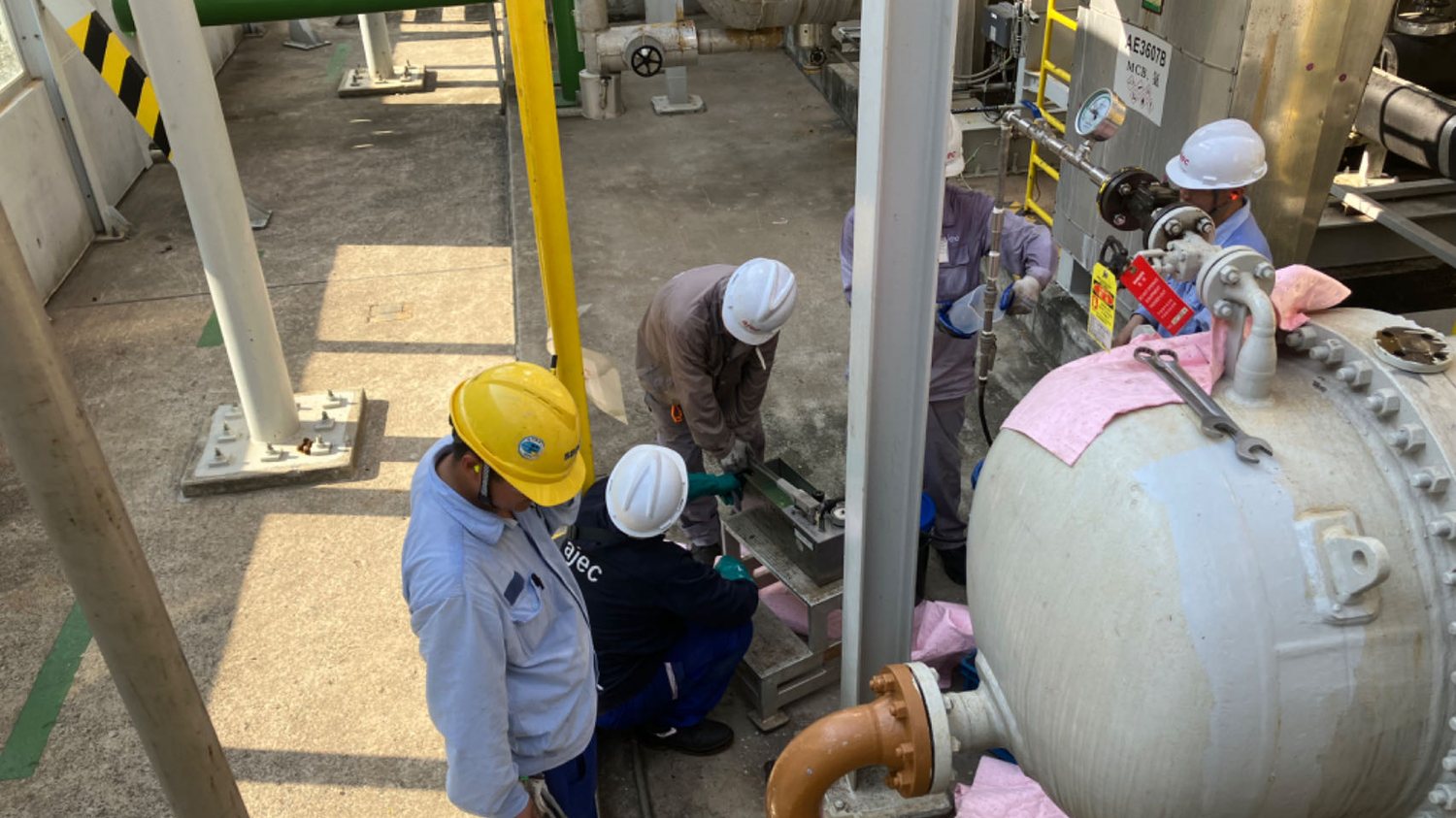
Charged with the plant running

Work is carried out through the existing oil fill port or a dedicated charging pump, alongside the customer's own operators and safety procedures.

NRLS being charged into a compressor oil circuit at an operating plant
On-site charging at an operating plant — no shutdown, no compressor teardown.
03 / Results

Changes you can read off the machine's own instruments

Actual figures depend on the machine and on how much oil has accumulated. What follows is what plant staff can observe and log directly.

Approach temperature
Condenser and evaporator approach temperatures move back toward design values.
Compressor current
Running current falls, provided suction pressure and cooling water inlet temperature are matched between the two readings.
COP
Less input power for the same cooling load. The size of the gain depends on machine type and on the degree of oil fouling.
Oil condition
Acid number falls and oxidation resistance improves, extending the useful life of the existing charge of refrigeration oil.
Wear and noise
Better lubrication at the friction pairs, lower vibration and running noise, longer intervals between overhauls.
Installation
Charged online. No shutdown, no oil change, no modification — typically 2 to 4 hours per machine.
04 / Where it applies

Where it works, and where it doesn't

NRLS only works where the lubricant circuit connects to the refrigerant side. Machines that isolate the two are outside its scope, and we say so before a project starts.

Applies to

  • Screw compressors, including variable-speed
  • Reciprocating compressors
  • Centrifugal compressors
  • Oils: mineral, alkylbenzene, PAO, POE
  • Refrigerants: R-22, R-134a, R-404A/R-507 and other halocarbons, plus R-717 (ammonia)
  • Industrial refrigeration in petrochemical, chemical, food and beverage, and pharmaceutical plants

Does not apply to

  • Magnetic bearing chillers, which run oil-free
  • The gas side of turbo compressors
  • Machines with existing mechanical faults or heavy waterside scaling — fix those first
05 / Verification

A saving is only real if it survives review

Before-and-after numbers mean nothing unless the operating conditions match. We agree the measurement method with the customer in writing before anything is charged.

Matched conditions

Readings are only compared when suction pressure, discharge pressure and cooling water inlet temperature fall within an agreed tolerance. Anything outside it is discarded.

Integral over average

Cumulative energy and cumulative cooling output over a continuous period, rather than spot readings or simple averages that load swings can distort.

Current as a proxy

With conditions matched, compressor running current is a valid performance proxy and gives plant staff a fast read on site.

Measured together

Measurement points, logging interval and calculation method are fixed in advance, and the customer's own staff take part throughout.

06 / About

TZ US INC

TZ US INC develops and manufactures energy efficiency technology for industrial refrigeration. NRLS is our own product, made in the USA. We supply petrochemical, chemical, food and beverage, and pharmaceutical plants, and provide technical assessment, on-site charging and performance verification for every project.

Contact

Want an assessment for a specific machine?

Send us the compressor model, refrigerant, oil grade and recent operating data. We will come back with a suitability judgement and a charging plan.

info@tzusinc.com
TZ US INC 9008 NE 54th St, Unit J39
Vancouver, WA 98662, USA